
Do You Have to Disclose Virtual Staging and AI Photo Edits?
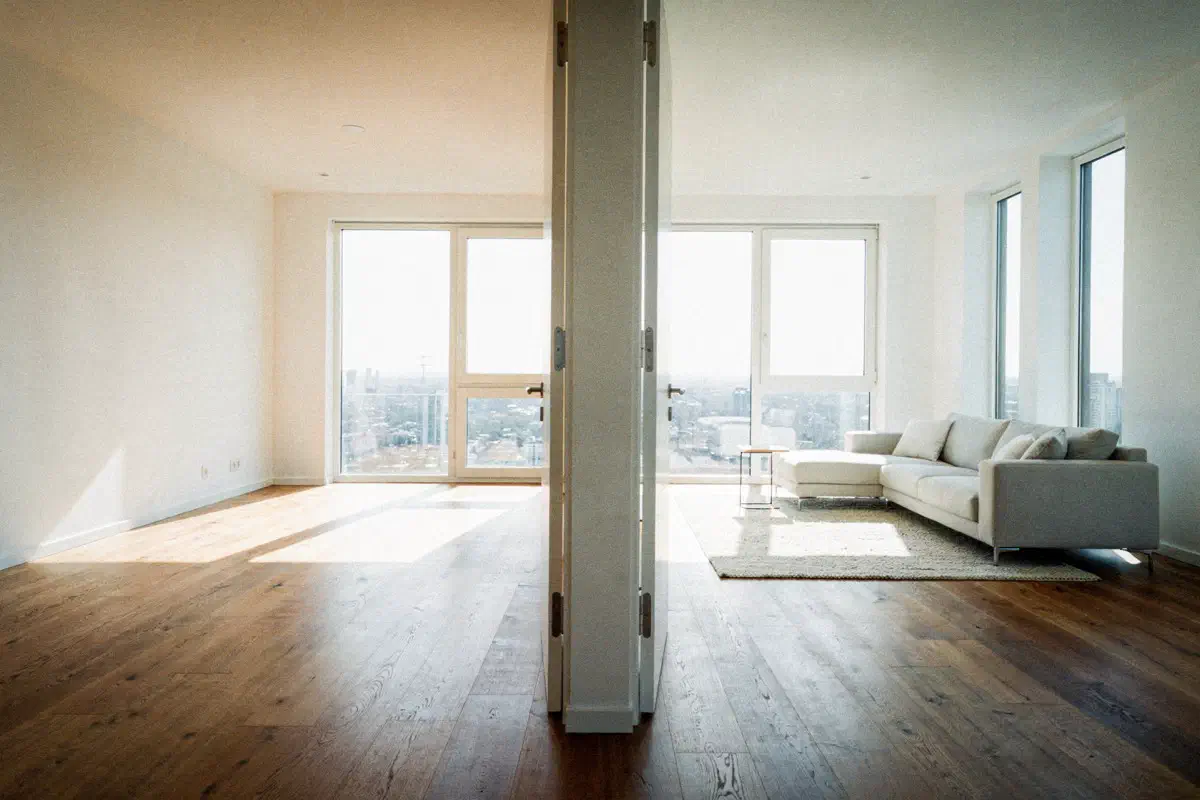
In California, yes. Since January 1, 2026, Business and Professions Code §10140.8 (AB 723) has required a disclosure on altered listing images, plus a link to the original. In the other states we track, we didn’t find an equivalent rule. Label it anyway. A virtually staged living room is fine when it’s labeled. An unlabeled one is a complaint waiting for the first buyer who walks in and finds an empty room.
Table of Contents
▼What Counts as an “Altered” Photo
Photo editing has always been part of listing marketing. Nobody is going to file a complaint because you brightened a dark kitchen. The question is whether the edit changes what a buyer would reasonably expect to see when they show up.
A useful way to sort it:
Usually fine without a label:
- Exposure, color balance and white balance
- Straightening verticals and correcting lens distortion
- Cropping
- Removing a photographer’s reflection from a mirror
Label it:
- Virtual staging (furniture, rugs and art that aren’t in the house)
- Sky replacement (gray sky swapped for blue)
- Grass greened up or a dead lawn replaced
- Twilight conversions of a daytime photo
- Removing items that are actually there, like a power line, a neighbor’s shed or a stain
- Renderings of renovations that haven’t happened
- Anything generated by AI rather than photographed
That second list is where the trouble lives. Some of these feel harmless. A blue sky doesn’t change the house. But “harmless” is a judgment call, and when a buyer feels misled, nobody is going to accept your judgment as the standard. Labeling takes the argument off the table.
California’s Rule: B&P §10140.8 (AB 723)
California is the first state on our list with a specific altered-image rule. Under Business and Professions Code §10140.8, added by AB 723 and effective January 1, 2026, an altered listing image needs:
- A disclosure that the image has been altered, and
- A link to the original, unaltered image.
California agents also have the state’s other advertising requirements on every post, including the license number. We cover those in the state’s social media rules.
The link to the original is the practical headache on social media. Instagram captions don’t make links clickable. On Instagram, a common approach is to post the original as the next slide in a carousel and note it in the caption. Whether that satisfies the “link” requirement for your listing is a question for your broker. On Facebook, a link in the caption works.
Everywhere Else: Best Practice
We didn’t find a rule like California’s in the other thirteen states in our state-by-state advertising rules guide. That doesn’t mean edited photos are a free-for-all.
Three reasons to label anyway:
Your advertising has to give an honest picture. State advertising rules exist to keep consumers from being misled. An unlabeled edit that hides a defect or adds a feature the home doesn’t have is exactly the kind of thing that turns into a complaint, whatever your state’s specific rules say. Check your own commission’s advertising rule for the exact wording.
Your MLS may have its own rule. MLS photo rules vary, and some address edits. Check yours before the photos go in, because social posts usually pull from the same set.
Other states may follow. AI editing is getting cheaper and more convincing. Building the label into your template now costs you nothing and saves you from re-shooting your process later.
Our own rule, for every client in every state: never post an altered or AI image without a label. It’s on our short never-list along with another broker’s listing without written permission and a review that isn’t verbatim.
How to Label It So the Label Survives
A disclosure buried in the 14th line of a caption doesn’t do much. People screenshot posts and share them without the caption. Put the label where it travels.
- On the image itself. A small, legible tag in a corner: “Virtually staged” or “Digitally altered.” Not so small it needs zooming.
- In the caption. One line near the top: “Living room and primary bedroom are virtually staged.”
- On video. If a Reel or walkthrough includes staged or AI-generated frames, put the label on screen during those frames, not only at the end.
- In carousels. Label each altered slide, not just the first.
- The original nearby. Even where it isn’t required, posting the unstaged photo next to the staged one is a good look. Buyers like seeing both, and it shows you’re not hiding anything.
AI Images of People and Fair Housing
This is the part of AI imagery agents think about least.
AI tools make it easy to drop “a happy family” into a staged backyard or generate a lifestyle shot of neighbors at a coffee shop. Those images still say something. The Fair Housing Act, 42 USC 3604(c), and HUD’s advertising regulation, 24 CFR 100.75, prohibit advertising that indicates a preference or limitation based on a protected class. That covers images, not only words. HUD withdrew its 2024 guidance on digital advertising, but the statute and regulation still apply.
When a person in a photo is generated, you made every choice about who appears. If every AI-generated family in your listing posts looks the same, that’s a pattern you created, and it can read as a preference.
Our practical advice:
- Skip AI people in listing posts. Show the house. Virtual staging furniture is fine. Generated residents are a risk without much reward.
- Watch the “perfect for” captions too. “Perfect for a young family” is a familiar fair housing slip whether the photo is real or not.
- Real people need real permission. If you use photos of actual clients or neighbors, see Posting Client Photos: Permission and Privacy.
Fair Housing on Social Media: Words, Photos and Targeting to Avoid goes deeper on wording and ad targeting.
Photo Rights Still Apply to Edited Photos
Editing a photo doesn’t make it yours. Listing photos are owned or licensed by the photographer or the listing broker, and you can use them only if you have the rights. Running another agent’s listing photos through a virtual staging app and posting them doesn’t create new rights. It likely makes the problem worse. See Who Owns Real Estate Listing Photos?
A photographer’s agreement may also limit edits. If you plan to stage virtually, check the agreement first.
A Quick Checklist Before You Post an Edited Photo
- Would a buyer walking in see something different from the photo? If yes, label it.
- Is the label on the image, not just in the caption?
- In California: is there a link to the original?
- Are there AI-generated people in the image? Take them out.
- Do you have the rights to the original photo, and does the photographer’s agreement allow edits?
- Does your MLS restrict the edit?
- Is the brokerage name on the post, at least as large as yours? (That’s the brokerage name rule, and it applies to edited posts too.)
- Did you save the original?
How We Handle Edited Photos for Clients
When we build an agent’s social posts, edited images get the label on the image and a line in the caption, every time, in every state, because an unlabeled altered or AI image is on our never-post list. We’ll also steer you away from AI-generated people in listing posts. The agent approves every post before it can be scheduled, so you see exactly how the label looks before anything goes out. A Freedom VA builds and schedules the posts; we don’t edit or shoot listing photos ourselves, and we use what you, your photographer or a licensed stock source provides.
If you’d like that built into your posts from the start, take a look at our done-for-you social media service, or start with the social media guide for real estate agents.
Virtual staging sells. Label it, keep the original, and leave the generated families out of it.
The Closing Table — Monthly Tips from the Contract-to-Close Experts
One email per month. No spam. Unsubscribe anytime.
Related Articles
- Real Estate Social Media Advertising Rules by State
- Fair Housing on Social Media: Words, Photos and Targeting to Avoid
- Who Owns Real Estate Listing Photos?
- Posting Client Photos: Permission and Privacy
- Realtor Instagram Bio Requirements by State
- Just Listed Post Ideas and Captions That Stay Compliant
- Archiving Agent Social Media Posts for Compliance