
The Contract That Starts Every Listing
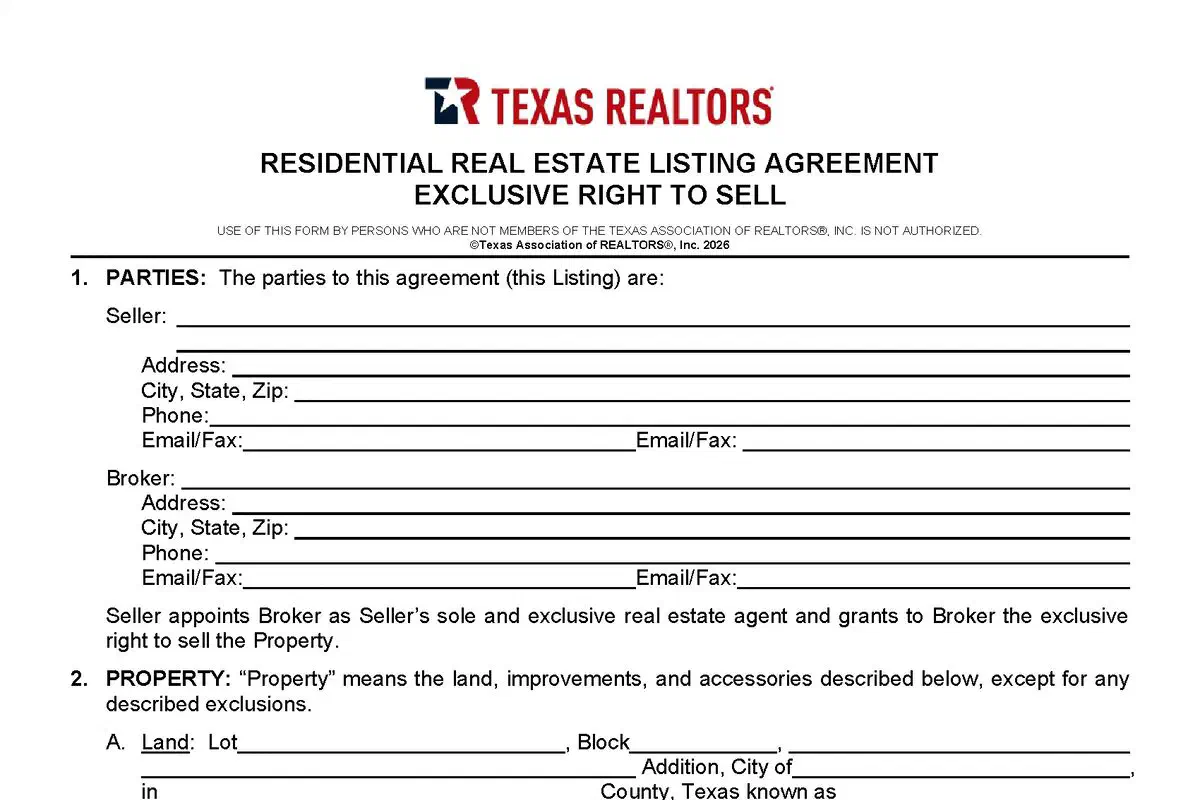
Every Texas listing starts with a listing agreement, and most Texas REALTORS use the same form: TXR-1101, Residential Real Estate Listing Agreement, Exclusive Right to Sell (formerly TAR-1101). The form is standard. The terms inside it aren’t. Every blank is something your seller and your broker agreed to, and those blanks are where most listing-side disputes start.
This guide walks through what the form covers, the parts sellers ask about, and what to walk your seller through before they sign.
Table of Contents
▼What the TXR-1101 Is
The TXR-1101 is a Texas REALTORS form. TREC doesn’t publish a listing agreement; it promulgates the purchase contracts and addenda. The listing agreement is between the seller and the broker, not the individual agent, which is why your broker’s policies decide how it gets filled out.
The form sets out:
- The parties and the property, including what conveys and what doesn’t
- The listing price
- The term: a start date and an end date
- The broker’s compensation (Paragraph 5)
- The protection period after the listing ends
- MLS, lockbox and showing authorizations
- What the broker will do and what the seller agrees to do
- Special provisions and any addenda
Types of Listing Agreements
There are three kinds, and your seller should know which one they’re signing.
Exclusive Right to Sell. The broker is owed compensation no matter who finds the buyer, another agent, the listing agent or the seller. This is what the TXR-1101 is, and it’s what most Texas residential listings use.
Exclusive Agency. The broker is owed compensation if any agent brings the buyer, but not if the seller finds a buyer completely on their own. Most brokers won’t take these.
Open listing. No exclusive relationship. Several brokers can market the property, and only the one who brings the buyer gets paid. Rare in residential.
If your seller says “I might sell to my neighbor,” that conversation happens before they sign an Exclusive Right to Sell, not after.
Listing Price and Term
The listing price is the number you’ll enter in MLS. When it changes, it should change in writing, and the MLS should match.
The term is how long the broker has the exclusive right to market the property. Terms vary a lot by brokerage, from 30 days with renewals to six months or a year. A shorter term gives both sides a natural checkpoint. A longer term means that if things go sideways, the exit is a negotiated termination instead of a fixed end date.
Check the dates against each other. An end date that falls before the start date, or a term that doesn’t match your broker’s policy, is one of the most common errors we catch.
Broker Compensation (Paragraph 5)
Paragraph 5 sets what the seller pays and to whom. It opens with the reminder that broker compensation isn’t set by law and isn’t controlled, fixed, recommended or suggested by any association, MLS or listing service. Brokers set their fees independently.
The paragraph splits into two paths: one where the seller pays the listing brokerage and offers compensation to the buyer’s brokerage, and one where the seller pays only the listing brokerage. Picking the wrong one is how a seller and an agent end up remembering the deal differently at closing.
We cover it line by line in TXR-1101 Paragraph 5: Broker Compensation, so we won’t repeat it here.
The form also covers when the fee is earned and payable. Walk your seller through it. Sellers are often surprised that the form describes situations where compensation can be owed even if the sale doesn’t close the way everyone expected.
The Protection Period
This one catches sellers off guard. The protection period is a number of days after the listing ends during which the broker can still be owed compensation if the property sells to a buyer the broker identified during the listing. The number of days is a blank on the form.
The idea is simple: a seller shouldn’t be able to wait out the listing and then sell directly to a buyer the broker’s marketing brought in.
What to know:
- The broker has to identify the buyers. The protection isn’t open-ended. It’s tied to specific people the broker identifies to the seller in writing after the listing ends. Check the current form for the deadline to send that notice, and put it on your deadline timeline.
- There’s a relisting exception. The form addresses what happens when the seller has signed a new listing agreement with another broker. Read the exact language so you can explain it to your seller.
- A termination can change it. If the listing ends early with the TXR-1410, that form generally releases the protection period, unless the parties write in a narrower protection window. See Termination of Listing in Texas.
In our experience, protection periods cause more friction than they collect. Most brokers we work with keep them short and the buyer lists specific.
Services and Marketing
The form’s description of what the broker does is broad: market the property, find a buyer, negotiate the sale. It doesn’t spell out photography, showings or who handles the contract-to-close work.
That’s a conversation, not a form question. If your brokerage puts specific service commitments in writing, the Special Provisions paragraph is where they usually go. Before your seller signs, settle:
- Who pays for photography, the sign and the lockbox
- Whether there are any upfront or marketing fees
- How showings are scheduled (most Texas MLSs use ShowingTime)
- What the seller owes if the property doesn’t sell
What the Seller Agrees To
The listing agreement isn’t one-sided. The seller takes on obligations too, including:
- Making the property available for showings
- Providing the required disclosures, like the Seller’s Disclosure and, for homes built before 1978, the lead-based paint addendum
- Cooperating with the broker’s marketing
- Telling the broker about material changes to the property
- Not listing with another broker during the term
If the seller can’t accommodate showings because of a work schedule or a tenant, that conversation belongs before the signature.
Ending the Agreement Early
The TXR-1101 doesn’t give the seller a right to cancel at will. It has a default paragraph that gives each side remedies if the other breaches. When both sides agree to part ways, they sign the TXR-1410 Termination of Listing. It can’t be used while the property is under contract.
If your seller is asking how to get out of a listing, see Termination of Listing in Texas. Whether a broker breached, or whether a seller owes compensation, is a legal question; at that point the seller and the broker should each talk to a real estate attorney.
What to Walk Your Seller Through Before They Sign
- Compensation. What they pay, to whom, and when it’s earned.
- Term. Start and end dates, and what happens at the end.
- Exit. How the listing ends early, and whether your broker charges anything to release them.
- Protection period. How many days, and how buyers get named.
- Costs. Photos, sign, lockbox, any upfront fees.
- Their obligations. Showings, disclosures, no other listing agreements.
A seller who understood all six at signing rarely fights about any of them later.
How Our Listing Coordinators Check the Listing Agreement
With listing coordination, the listing agreement is the first thing we look at. Before anything goes in MLS, we check it against your broker’s requirements:
- Every blank your broker requires is filled in, and every page is initialed and signed
- The seller names match the deed and the other listing documents
- The term dates make sense and match your broker’s policy
- Paragraph 5 uses one compensation path, not both, and the numbers match what you told us
- The listing price matches what’s going in MLS
- The required addenda and disclosures are attached
If something is missing or inconsistent, we tell you. We don’t change the agreement, and we don’t approve it; your broker reviews and approves the file.
Then we schedule photos, staging, the sign and the lockbox, enter the listing in MLS and upload the documents, set up ShowingTime, and send you the MLS listing to approve before it goes live. Once it’s live, we send the go-live emails. Everything goes through you, and you’re copied on everything.