Is TikTok Worth It for Real Estate Agents?
For some agents, yes. If you’re comfortable talking to a camera, you’ll film three or more short videos a week for at least six months, and your market has plenty of first-time buyers or people relocating in, TikTok can put you in front of people who’ve never heard of you. If you won’t film consistently, it’s probably not worth it yet. A Facebook Page, Instagram and Google Business Profile done well will get you more for the same hours.
That’s not a knock on TikTok. It’s just honest about what it asks of you.
Table of Contents
▼What TikTok Does Well (and What It Doesn’t)
TikTok is a discovery platform. Its feed shows people videos from accounts they don’t follow, based on what they watch. That’s its big advantage over Facebook, where your posts mostly reach people who already know you.
So TikTok is good at:
- Reaching strangers in your market. A video answering “What does an option period actually mean in Texas?” can reach buyers in your city who’ve never met you.
- Building familiarity before a first call. People who’ve watched ten of your videos feel like they know you. That’s a real advantage when they’re picking an agent.
- Showing personality. If you’re funny, direct or just good at explaining things, it shows on video in a way a graphic can’t.
It’s weaker at:
- Staying in touch with your sphere. Your past clients and referral sources are more likely to see you on Facebook.
- Short-term results. It takes months of posting before most accounts get steady views, and views aren’t clients.
- Anything you can’t film. There’s no TikTok without video. A graphic with music doesn’t do much there.
We don’t have reliable numbers on how many agents get closings from TikTok, and you should be skeptical of anyone who quotes you one. NAR’s 2025 Technology Survey found social media was agents’ top lead-generating technology overall, but it doesn’t break that down in a way that proves TikTok works for you. Your own results after six months will tell you more.
Who TikTok Fits
Be honest with yourself here. TikTok is a good fit if most of these are true:
- You like being on camera, or at least don’t hate it.
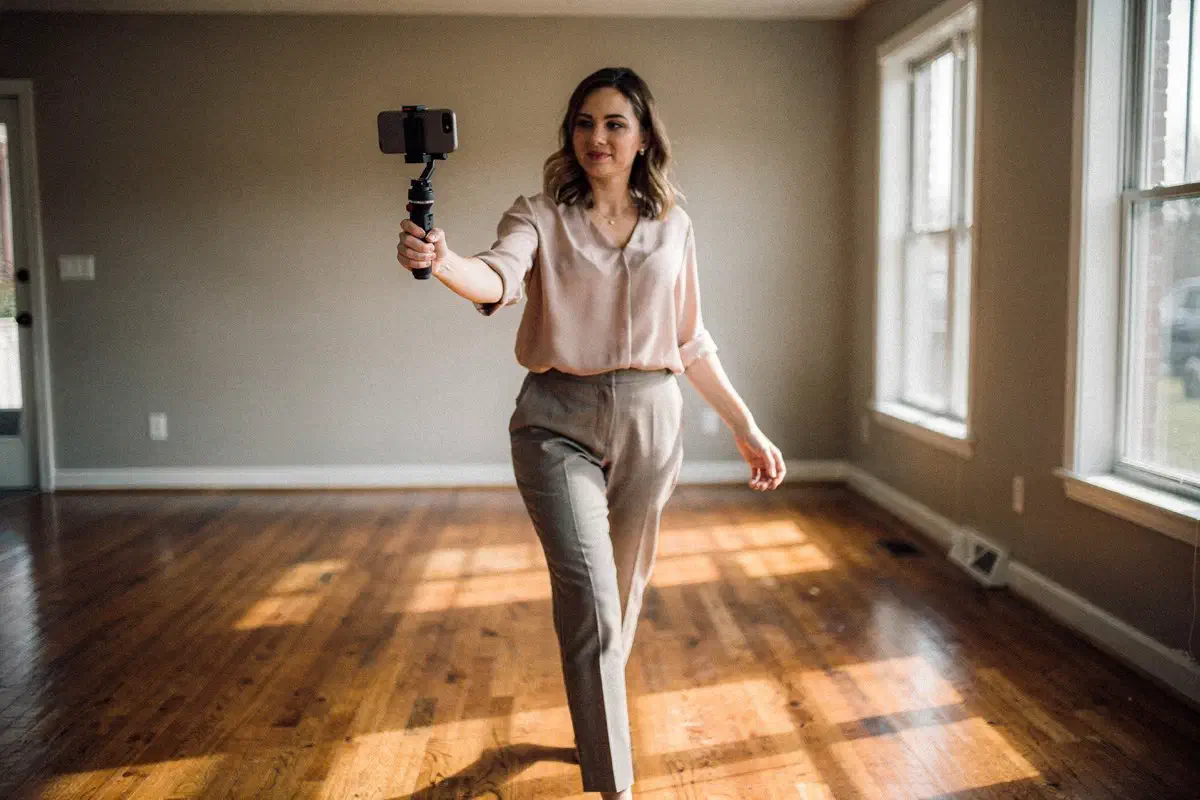
- You’ll film in short bursts during your normal day (in the car before a showing, walking a neighborhood, at your desk).
- Your market has a lot of first-time buyers, younger sellers, or people moving in from somewhere else.
- You have a point of view. “Here’s what I’d do” beats “here are five tips.”
- You’re willing to post for six months before deciding whether it works.
It’s probably not the right next channel if:
- You don’t have a Facebook Business Page and a linked Instagram yet. Start there. See Facebook Business Page vs Personal Profile for Realtors.
- You’d rather not show your face. There are ways to post without it (see posting without showing your face), but TikTok rewards people more than it rewards slideshows.
- Your business is mostly sphere and referral. Facebook does that job better.
- You’re going to film twice and stop. An abandoned TikTok with four videos doesn’t help you.
If you’re camera-shy but curious, start with video ideas for camera-shy agents on Instagram Reels first. The same videos can go to TikTok later.
What to Post on TikTok
The videos that work for agents tend to be specific, short and useful. A few formats that fit:
- One question, one answer. “Can I back out after the inspection?” Answer it in 30 to 45 seconds for your state, and tell people to talk to their own agent or attorney about their situation. Don’t give legal advice.
- Neighborhood clips. The new park, the trail system, what the drive into downtown looks like at 8 a.m. Talk about places and amenities, not who lives there.
- Process explainers. What happens between contract and closing, what an appraisal is, why the title company needs that form. You know this stuff better than most people on the platform.
- Myth-busters. “You don’t need 20% down” is the classic. Keep it general and don’t quote loan terms you can’t stand behind.
- Listing walkthroughs. Fine, if your seller agrees, you have the rights to the footage, and the listing is already in the MLS. Keep them short and show the best three things about the house.
- A day in the work. Driving to an inspection, the inside of a lockbox, a stack of signed docs (with nothing readable). People find the work interesting.
Our Instagram Reels ideas for real estate agents has 30 more, and nearly all of them work on TikTok too.
What to leave out
Never film or post financial or closing-figure details: no prices on sold homes unless your client asks and your MLS and state allow it, no concessions, no repair amounts. Don’t film clients without their written okay. And don’t film the inside of a home where the seller’s personal information (mail, family photos, a calendar on the fridge) is visible.
TikTok Is Advertising: The Video Disclosure Rules
This is where most agent TikToks fall short. Every state treats social media promoting your real estate services as advertising, and that includes a 20-second video.
Video makes disclosure harder because people don’t read captions and they don’t visit your profile before watching. So the disclosure has to be in the video, not just in your bio.
A few examples from our compliance research:
- Alabama (§34-27-36 and Rule 790-X-3-.16): the qualifying broker or company name has to appear prominently in every post unless the company name is in the account name. For video, Alabama wants it at the start of the video. Not at the end card. The start.
- Some states go further. California, for example, requires your license number on every post, including video and Live.
- Texas (22 TAC §535.155): the broker’s name can sit on your profile if it’s readily accessible by direct link and noticeable. Even so, a video that gets shared or downloaded travels without your profile.
- North Carolina (21 NCAC 58A .0105, per association summaries we’ve reviewed): the firm name is expected in the post itself.
The full state-by-state table is in Real Estate Social Media Advertising Rules by State. Check your own state’s rule and your broker’s policy.
The simple fix
Here’s the setup that works in every state we’ve researched:
- Open every video with your brokerage name on screen. A lower-third or a small banner during the first two seconds. That satisfies Alabama’s start-of-video rule and costs you nothing elsewhere.
- Keep a small brokerage watermark on screen for the whole video, at least as large as your own name. Add your license number if your state requires it.
- Put the brokerage name in the caption, plus your state’s extras (a phone number in Georgia or Louisiana, for example).
- Put full disclosures in your profile bio, including any required links. Texas agents should link the IABS and Consumer Protection Notice.
Build it once as a template in whatever editing app you use, and every video starts compliant.
Other rules that follow you onto TikTok
- Fair housing (42 USC 3604(c) and 24 CFR 100.75) applies to what you say on camera, what you show and what you put in captions and hashtags. “This neighborhood is perfect for young families” is a slip on video just like in print. See Fair Housing on Social Media.
- Clear Cooperation. A TikTok of a listing is public marketing, so the listing must be in the MLS within one business day. Don’t post delayed-marketing exempt listings at all.
- Music. A business account has a narrower library of sounds cleared for commercial use. A listing video is commercial. Use cleared sounds, original audio or your own voice.
- Altered images. If you use virtually staged or AI-edited photos in a video, label them. Some states require a disclosure on digitally altered listing images. See virtual staging and AI photo disclosure.
How Much Time TikTok Really Takes
Plan on two to four hours a week if you’re doing it yourself: thinking up ideas, filming, a quick edit, captions, and posting. Faster once you have a rhythm, slower in the first month.
Then there’s the part that doesn’t show up in the plan. People comment and send messages, and on TikTok they ask real questions: “Is this house still available?” “Do you work in Cypress?” Those are leads, and they’re conversations with consumers about real estate. Someone has to answer them, and it should be you.
Can Someone Else Run Your TikTok?
Partly. Scheduling tools can post to TikTok, and a VA or a service can caption your clips, add the disclosure frame, and schedule them. What nobody can do is be you on camera, and nobody else should be answering your comments or messages.
At Freedom, we don’t shoot video, and we never reply to comments or DMs or talk to consumers on your behalf. If a client picks TikTok as their third channel and films their own clips, a Freedom VA can put the disclosure on them, write the captions and schedule them, and the client approves every one before it goes out. Nothing unapproved posts. Details are on the Social Media Management service page, and the overall plan is in Social Media for Real Estate Agents.
Our Honest Recommendation
Get Facebook and Instagram running consistently first. If you’re still posting there every week after three months and you find yourself wanting to film, add TikTok and give it six months. Post the same short videos as Instagram Reels so the work counts twice.
If you never get to TikTok, you haven’t missed the boat. You’ve just picked the channels you’ll actually keep up.
The Closing Table — Monthly Tips from the Contract-to-Close Experts
One email per month. No spam. Unsubscribe anytime.
Related Articles
- Social Media for Real Estate Agents: The Done-for-You Guide
- 30 Instagram Reels Ideas for Real Estate Agents
- YouTube for Realtors: Neighborhood and Process Videos
- Video Ideas for Camera-Shy Agents
- Real Estate Social Media Advertising Rules by State
- Does My Brokerage Name Have to Be on Every Social Post?
- Fair Housing on Social Media: Words, Photos and Targeting to Avoid