Ending a Listing Agreement the Right Way
A listing agreement is a contract — and like any contract, there’s a process for ending it. In Texas, the TXR-1410 Termination of Listing form is how sellers and brokers formally part ways before the listing term expires.
This isn’t a complicated form. It’s one page. But understanding what it does — and what your seller is agreeing to when they sign it — matters.
Table of Contents
▼What the TXR-1410 Does
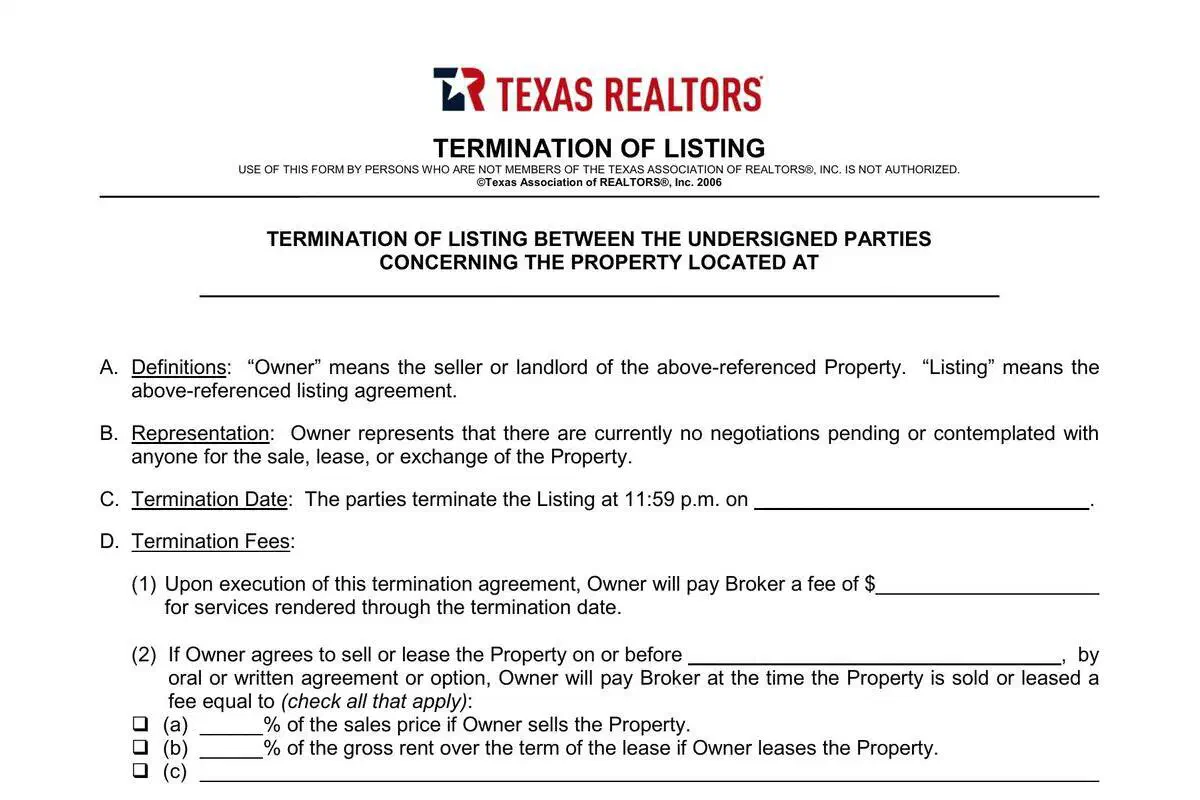
The TXR-1410 terminates the listing agreement (the TXR-1101 for most residential listings) and releases both parties from all obligations under it. That includes the protection period — the window after a listing expires where the broker might still be owed a commission. Once both sides sign the TXR-1410, the protection period no longer applies.
The form covers three things:
Representation that no deals are pending. Paragraph B requires the seller to represent that there are no negotiations pending or contemplated with anyone for the sale, lease, or exchange of the property. You can’t use this form to terminate a listing while the property is under contract — the listing stays active until that deal closes or falls apart.
Termination fees. Paragraph D is where the broker and seller agree on any fees owed. This could be nothing. It could be reimbursement for marketing expenses the broker has already incurred — photography, signage, advertising. The amount is negotiated, not fixed. There’s also a provision that allows the broker to earn a fee if the property sells within a specified window to a buyer the broker introduced — a narrower version of the protection period tailored to the circumstances.
Mutual release. Paragraph E releases both parties from all obligations under the listing agreement. Once signed, neither side owes the other anything beyond what’s specified in the termination form itself.
When This Form Gets Used
The relationship isn’t working. The seller isn’t happy with the broker’s performance, communication, or marketing. Rather than wait out the listing term, both sides agree to part ways.
The seller’s circumstances changed. Job loss, divorce, health issue, change of plans — life happens. The seller no longer wants to sell, and continuing to market the property doesn’t make sense.
The listing term is about to expire and neither side wants to renew. Some brokers use the TXR-1410 to cleanly close out the relationship rather than just letting the listing expire, especially if they want to formally address the protection period.
What to Tell Your Seller
They can’t terminate while under contract. The form requires the seller to represent that no negotiations are pending. If the property is under contract, the listing stays in place until that contract closes or terminates.
The termination fee is negotiable. The TXR-1410 has a blank for the fee amount — it’s whatever the seller and your broker agree to. Some brokers charge nothing. Some ask for reimbursement of out-of-pocket expenses. The easiest version of this conversation happens when the original listing agreement is signed, so the seller knows what to expect if things don’t work out.
Paragraph D(2) needs specifics. This section allows the broker to earn a commission if the property sells within a specified time to a buyer the broker introduced. That’s reasonable — the broker doesn’t want to lose a commission on a deal they set up — but the timeframe and the list of buyers should be specific, not open-ended. Vague language here is how a clean break turns into a commission dispute.
The protection period goes away. Once both sides sign the TXR-1410, the protection period from the original listing agreement no longer applies (Paragraph E explicitly states this). This is a clean break.
How Our TCs Prepare It
When an agent tells us a listing is ending, we fill out the TXR-1410 at your direction: the fee terms and any buyers named under Paragraph D(2) come from you and your broker. The negotiating stays with you. We don’t set the fee or decide who goes on the buyer list.
Then we:
- Check the names, property description and listing date against the original listing agreement
- Send the completed form to you to review and take to your seller for signature
- Track the signed copy from the seller and your broker
- File the fully signed form with the listing in your broker’s compliance system
- Update the MLS status once the signed form is in, and schedule the sign and lockbox pickup
If D(2) has a buyer list and a time window, we add the end date to the deadline timeline so you know when that protection runs out.