
When the Buyer Has to Sell Before They Can Buy
An offer comes in with the TREC Addendum for Sale of Other Property by Buyer attached. Translation: this buyer wants the house, but they need the money from their own sale to close. That’s not a bad offer. It’s a conditional one, and the conversation you have with your seller before they sign it matters more than usual.
Table of Contents
▼What the TREC 10-6 Says
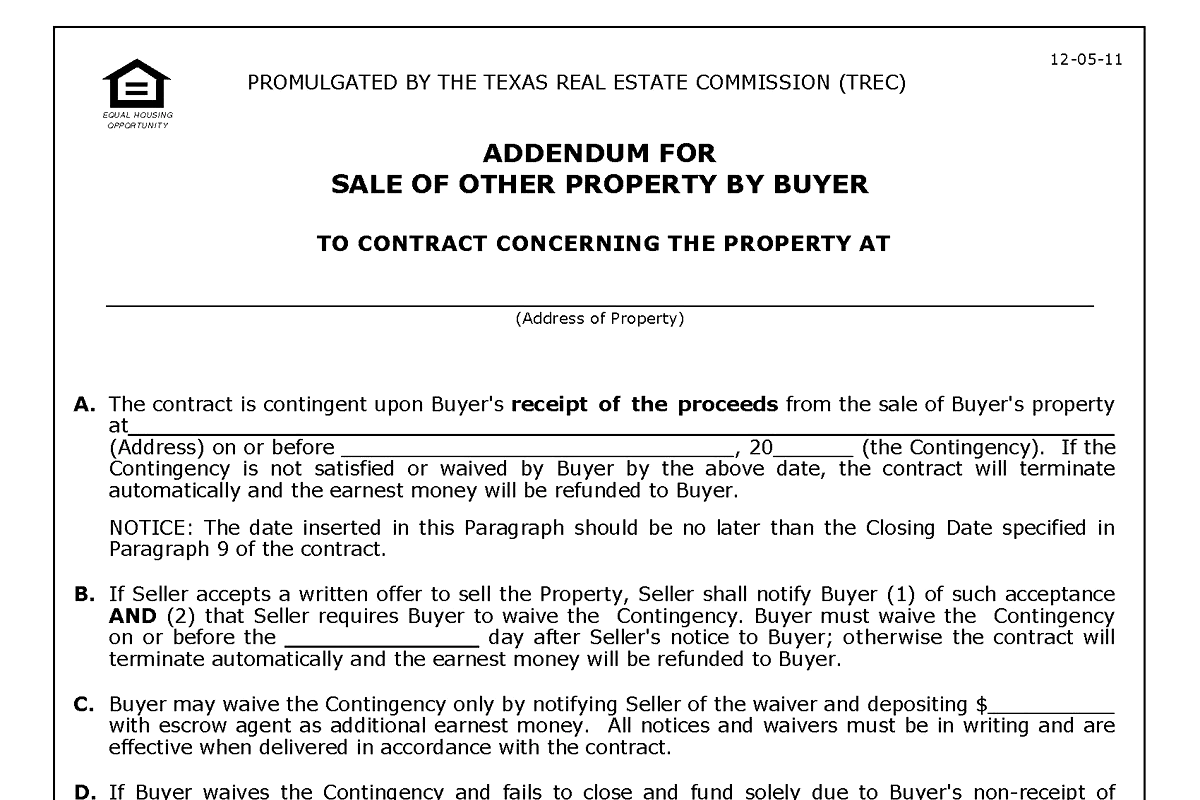
The current form is TREC 10-6, the Addendum for Sale of Other Property by Buyer. It’s one page, and Paragraph E makes time of the essence: strict compliance with every deadline in it is required.
Paragraph A: the contingency. The contract is contingent on the buyer receiving the proceeds from the sale of the buyer’s property (address filled in) on or before a date filled in. If the contingency isn’t satisfied or waived by that date, the contract terminates automatically and the earnest money is refunded to the buyer. The form notes the date should be no later than the closing date in Paragraph 9 of the contract.
Paragraph B: the kick-out. If the seller accepts a written offer to sell the property, the seller notifies the buyer (1) of that acceptance and (2) that the seller requires the buyer to waive the contingency. The buyer must waive on or before the day filled in after the seller’s notice, or the contract terminates automatically and the earnest money is refunded.
Paragraph C: how the buyer waives. Only by notifying the seller of the waiver and depositing the additional earnest money amount filled in with the escrow agent. All notices and waivers must be in writing.
Paragraph D: after a waiver. If the buyer waives and then fails to close and fund solely because they didn’t receive the proceeds from their own property, the buyer is in default, and the seller may use the remedies in Paragraph 15 of the contract.
The TREC One to Four Family Residential Contract (Resale), TREC 20-19, lists the Addendum for Sale of Other Property by Buyer in Paragraph 22 under Financial addenda. Check the box when it’s attached.
How the Kick-Out Works in Practice
“Kick-out clause” is what agents call Paragraph B. Once the seller signs a SOOP contract, it’s a live contract: option period, inspections, appraisal and financing all run like any other file. The difference is that the seller can keep marketing, and two things can end it early:
- The buyer’s sale doesn’t produce proceeds by the Paragraph A date. The contract terminates automatically.
- The seller accepts another written offer. The second offer is usually written as a back-up, with the TREC Addendum for “Back-Up” Contract (11-9). The seller then sends the Paragraph B notice. The first buyer either waives the contingency in writing and deposits the extra earnest money by the deadline, or the contract terminates.
Notice what triggers it: the seller accepting a written offer, not just receiving one. The seller has to be ready to commit to the second buyer before sending the notice.
Showing activity drops. The listing moves to a pending-type status that still allows showings; names vary by MLS. In our experience, a lot of buyers and agents skip over anything that isn’t Active, so the kick-out only helps if a second offer actually shows up.
What to Discuss With Your Seller
These are the questions we see good listing agents walk through with a seller before a SOOP offer is signed. The decision belongs to the seller, with your advice.
Where is the buyer’s own sale?
- Not listed yet. The most uncertain. The buyer’s home has to list, go under contract and close before your seller’s deal can.
- Listed, not under contract. Ask about price, days on market and showing activity.
- Under contract. Much better, and how much better depends on how far along it is. Past the option period? Financing approved? Appraisal done? A closing date set?
- Already closed. Then there’s nothing to be contingent on, and the addendum usually isn’t needed.
What’s the market doing for this listing? A listing with strong showings and offers likely coming may do better waiting for a clean contract. A listing that’s been sitting may be better off with a contingent buyer and a kick-out than with no buyer.
How long is the kick-out window? A short window in Paragraph B means the second buyer isn’t left waiting. A long one weakens the kick-out.
How much additional earnest money in Paragraph C? A meaningful amount is a better test of whether the first buyer can really perform without their sale.
Does the Paragraph A date work? It should be no later than the closing date. If the seller has a hard date (a purchase of their own, a relocation), a contingency may not fit.
What’s the rest of the offer like? Price, option period, financing and closing date all still matter. A strong offer with a SOOP may beat a weak clean one.
Whether a notice or waiver was effective, or whether a buyer is in default, are legal questions. When it gets there, your client should talk to a real estate attorney.
How Our TCs Handle It
We fill out the TREC 10-6 only at your specific written direction: the buyer’s property address, the Paragraph A date, the Paragraph B day count and the Paragraph C additional earnest money come from you and your client. We don’t choose them and we don’t negotiate them.
Then we:
- Send the completed addendum to you to review and take to your client, and track signatures
- Add the contingency date to the deadline timeline with 48-hour reminders, alongside the earnest money, option fee, survey and the rest of the file
- When you tell us your seller has accepted a back-up offer and the Paragraph B notice has been delivered, add the buyer’s waiver deadline to the deadline timeline the same day
- Confirm with title when additional earnest money is received, if the buyer waives
We don’t track the buyer’s other sale, and we don’t contact the buyer or seller. Everything goes through you, and you’re copied on everything.