
When a Deal Ends, the Earnest Money Doesn’t Move by Itself
Contracts fall through. When one does, the first question from both sides is who gets the earnest money. The answer is never automatic. The title company holds the money in escrow, and it doesn’t decide who was right. The buyer and seller document what they agree on, on the Release of Earnest Money.
Table of Contents
▼What the TXR-1904 Is
The Release of Earnest Money is TXR-1904 (formerly TAR-1904), a Texas REALTORS form. People call it the “TREC release,” but TREC doesn’t publish one. See earnest money in Texas for what TREC does publish.
It’s a short form, but it does more than tell title where to send the deposit. Straight from the form: “This form provides for the release of the parties, brokers, and title companies from all liability under the contract (not just for disbursement of earnest money).”
The form identifies the property and the contract. It says how the earnest money goes: all to the buyer, all to the seller, or split. The buyer and the seller sign it, along with the brokers. It goes to the title company, and the money moves.
What the TREC Contract Says
Paragraph 18 of the TREC One to Four Family Residential Contract (Resale), TREC 20-19, sets the process. Straight from the form: “Upon termination of this contract, either party or the Escrow Agent may send a release of earnest money to each party and the parties shall execute counterparts of the release and deliver same to the Escrow Agent. If either party fails to execute the release, either party may make a written demand to the Escrow Agent for the earnest money.”
In plain English: the parties sign a release, or a party makes a written demand on the escrow agent. The title company follows the contract and the law. It doesn’t decide on its own who’s right.
When It’s Used
Any time a contract ends without closing. The most common cases:
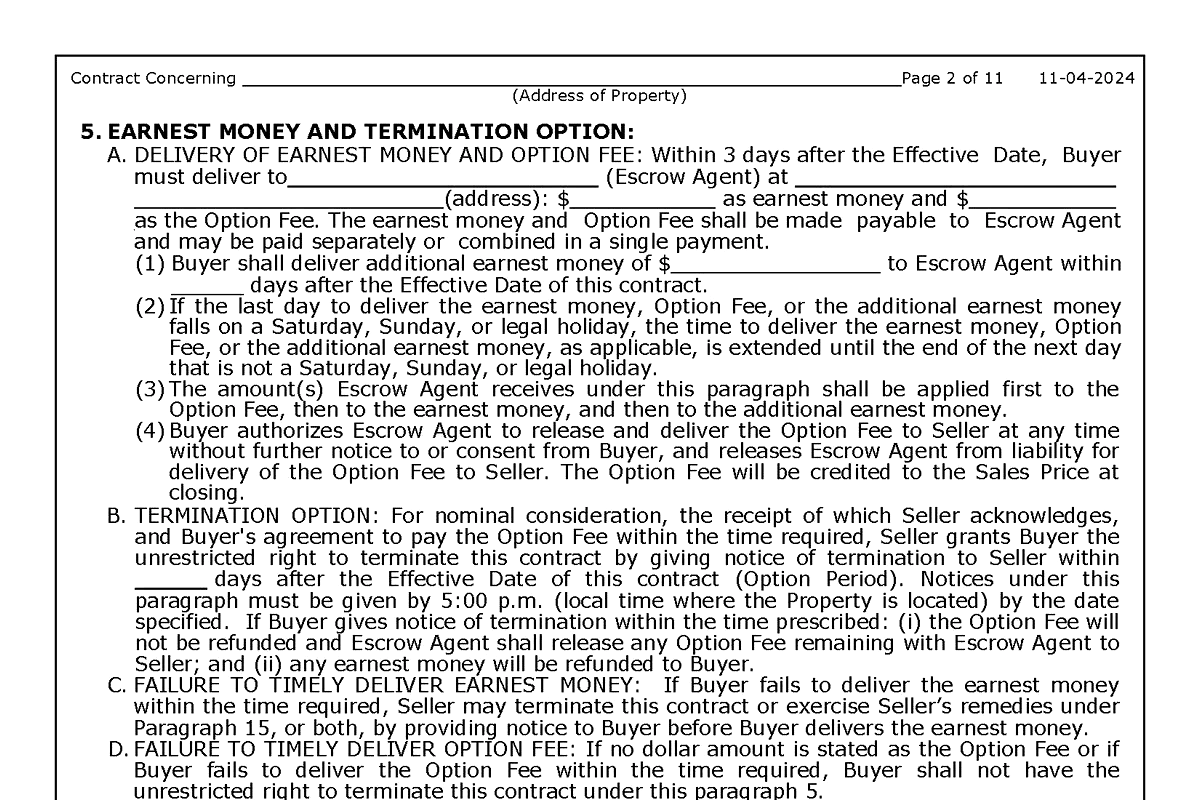
- Buyer terminates in the option period. The cleanest version. The buyer gives written notice before the option period ends (option period in Texas), the earnest money goes back to the buyer, and the seller keeps the option fee. This is routine and rarely contested.
- Financing falls through. If the buyer terminates under the Third Party Financing Addendum within its deadline, the earnest money typically goes back to the buyer.
- Another contingency fails. Title objections that can’t be cured, survey problems, or a property-specific addendum that lets the buyer out.
- Mutual cancellation. Both sides agree to walk away and sign the release.
- Buyer default after the option period. This is where it gets contested. With no contractual right to terminate, the seller may have a claim to the earnest money, and the buyer may refuse to sign.
When the Parties Don’t Agree
This is what brings most people to this page.
The money sits. Without a signed release, the earnest money stays in escrow. There’s no automatic deadline that moves it.
A party can make a written demand. Paragraph 18 lets either party demand the earnest money from the escrow agent in writing. In our experience, title companies are cautious. We haven’t seen one decide on its own to pay one side over the other’s objection; most files wait until everyone signs. A title company may also file an interpleader and deposit the funds with the court.
Broker to broker first. Most disputes we see get settled between the two agents and their brokers: a split, or one side deciding its position isn’t as strong as it thought. It’s the fastest and cheapest path.
Mediation. The TREC contract calls for mediation (Paragraph 16) before going to court. It costs money, but far less than a lawsuit.
Court. Expensive and slow. Legal fees often pass the amount of the earnest money itself.
Whether a termination was valid, whether a demand fits the contract, and who’s entitled to the money are legal questions. When it gets to that point, the client should talk to a real estate attorney.
What the Release Covers
More than the deposit. The release releases everyone from all liability under the contract, not just the earnest money.
It’s a separate step from the termination. A termination notice ends the contract; the money stays with title until the release is signed or a dispute is resolved.
The paper trail matters. In a dispute, the termination notice, emails, texts, reports and dates are what the brokers, a mediator or an attorney will look at.
How Our TCs Handle a Release
When you tell us a contract is ending, we fill out the TXR-1904 only at your specific written direction. How the money is split comes from you and your client. We don’t decide it, negotiate it or advise on it, and we never handle the money.
Then we:
- Check the names, property, contract date and earnest money amount against the contract and the title company’s receipt
- Send the completed release to you to review and take to your client
- Track signatures from both sides, with you copied on everything
- Deliver the fully signed release to the title company and confirm when it’s received
- Confirm with title that the earnest money was disbursed, and close out the file in your broker’s compliance system
If the other side won’t sign, we let you know right away. What happens next is between you, your broker and your client.