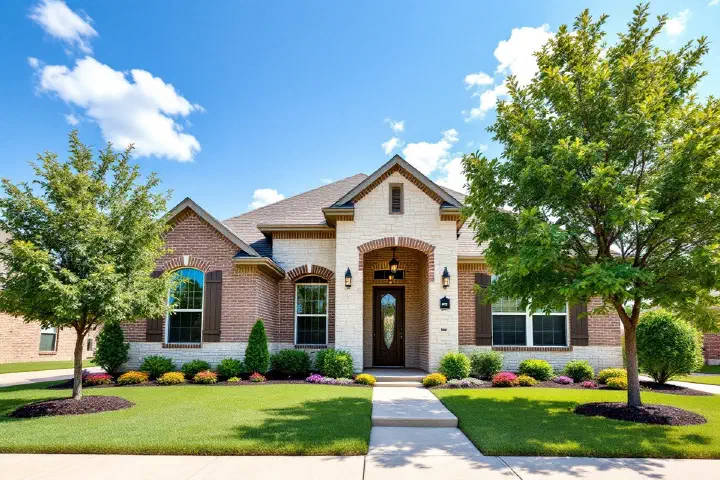

A Good Real Estate Caption Has Four Parts: a Hook, One Idea, a Next Step and Your Brokerage Name
The first line has to earn the second. Then give people one useful idea or detail, not five. Tell them what to do next, if anything. And end with your disclosure line: your name, your brokerage and anything else your state requires. Hashtags come last, and fewer is better.
That’s the formula. The rest of this post is examples, the disclosure line in detail and how to think about hashtags without falling for the latest myth.
Table of Contents
▼Part 1: The First Line
On most platforms, people see your first line or two before they decide whether to tap “more.” That’s the whole job of line one: get the tap.
What works:
- A specific detail. “The pantry has a window.” beats “Check out this amazing home!”
- A question people actually wonder about. “Why does your lender keep asking for the same bank statement?”
- A local reference. “If you’ve driven [Road] this week, you already know.”
- A small confession. “I used to think staging was a waste of money.”
What doesn’t: “Happy Monday!”, “Exciting news!”, “Just listed!!!” on its own, or anything that could be the first line of any agent’s post in any city.
Part 2: One Idea
Pick one thing and say it well. A caption that tries to cover the whole house, the neighborhood, the market and your services ends up saying nothing.
Short is fine. A sentence or two works for most posts. Longer captions can work for a story or an education post, as long as every line earns its place. Break long captions into short paragraphs so they don’t turn into a wall of text on a phone.
Write the way you talk. If you’d never say “boasting an abundance of natural light” out loud, don’t write it.
Part 3: The Next Step
Not every post needs a call to action. A local coffee shop post can just be a local coffee shop post. But when you want something, ask for one thing:
- “Save this for your next freeze.”
- “Tell me your favorite taco spot in the comments.”
- “Message me if you want the full list.”
- “Know someone who’d want this? Send it to them.”
If your caption invites comments or messages, you’re the one who has to answer them. Plan for it. Those conversations are where the business comes from, and they belong to you, not to whoever helps with your posting.
Part 4: The Disclosure Line
This is the part most caption guides skip, and it’s the one that can get you a letter from your state.
Every state treats real estate social media posts as advertising. The details vary:
- In Texas, 22 TAC §535.155 lets the broker’s name sit on your social media profile if it’s readily accessible by a direct link and noticeable.
- In Alabama, the qualifying broker or company name goes in every post unless the company name is in the account name.
- In North Carolina, per association summaries of 21 NCAC 58A .0105, the firm name is expected in the post itself.
Our default for every client is the brokerage name in the image and in the caption, every post, at least as prominent as the agent’s own name. That satisfies every state we’ve checked, and it survives when someone shares your post without your profile attached. Full citations are in real estate social media advertising rules by state, and the short version is in does my brokerage name have to be on every social post?
A disclosure line can be simple:
Jane Smith | ABC Realty | (555) 555-0100
Add your license number, team name rules or anything else your state or broker requires. Then save it as a text snippet so you paste the same line every time instead of retyping it.
Caption Examples by Post Type
These are written fresh for this post. Swap in your details and add your disclosure line at the end of each. For listing captions, use our Just Listed caption ideas and Just Sold post ideas instead. We didn’t repeat them here.
Local
“There’s a new bakery on [Street], and I’ve been twice this week for research purposes. Go early. The cinnamon rolls are gone by ten.”
Buyer education
“Pre-qualified and pre-approved sound the same. They aren’t. Pre-qualified is a conversation. Pre-approved means a lender actually looked at your documents. Sellers notice the difference. Ask your lender which one you have.”
Seller education
“The photographer is coming Tuesday. Here’s the one thing I ask every seller to do the night before: clear every countertop. All of them. Even the coffee maker.”
Homeowner tip
“First freeze is in the forecast. Disconnect your hoses, cover the outdoor spigots and know where your water shutoff is before you need it. Save this one.”
Behind the scenes
“What a Tuesday looks like: two showings, one inspection, and a lot of emails in between. You only see the keys at the end.”
Engagement
“Honest question: carpet in the bedrooms, yes or no? I’ll go first. Yes, but only in the bedrooms.”
Review (quoted exactly as the client wrote it, with permission)
“Thank you to [First Name] for this one: ‘[exact review text, typos and all].’”
That last one matters. The FTC’s rules (16 CFR 255, and 16 CFR 465, in effect since October 21, 2024) bar fake or edited reviews. Fixing a client’s typo counts as editing. See testimonial posts and FTC rules.
Words to Keep Out of Captions
The Fair Housing Act (42 USC 3604(c)) covers any ad that indicates a preference based on a protected class, and HUD’s rule at 24 CFR 100.75 spells out that word choice counts. Social captions are ads.
Describe the property and the place. Don’t describe the people:
- “Perfect for a young family,” “great for empty nesters,” “ideal for a bachelor” and similar phrases describe people.
- “Safe neighborhood” and “great schools” are claims you can’t back up, and they invite questions about who you’re steering where.
- “Walking distance to [place of worship]” can signal a religious preference. Name parks and coffee shops instead.
- “Exclusive” or “private community” can read as exclusionary depending on context.
Our fair housing on social media post has the longer list.
How to Think About Hashtags
Every year someone announces that hashtags are dead, or that you need exactly five, or thirty, or none. The honest answer is that the platforms change how they use hashtags, they don’t publish the details, and anybody quoting a precise number is either guessing or repeating an old rule.
So we use a simple approach that doesn’t depend on the algorithm of the month:
- Describe the post accurately. A hashtag should tell someone what the post is about. If it doesn’t, cut it.
- Lean local. Your city, your neighborhood, your county. People searching a local hashtag are closer to being clients than people searching a national one.
- Keep it to a handful. A few relevant tags look intentional. Thirty generic ones look like a bot.
- Put them at the end, after the disclosure line, so they never push your brokerage name below the fold.
- Make a few reusable sets (local, buyer, seller, homeowner) so you’re not inventing tags every post.
Hashtags to skip
- Anything about people. Family-oriented, young-professional or “perfect for retirees” style tags have the same fair housing problem as the words above.
- Safety and school claims. Same reason.
- Other brokerages’ branded tags. It can look like you’re affiliated with them.
- REALTOR used as a generic word. REALTOR® is a trademark of the National Association of REALTORS®, with rules on how members use it. See using REALTOR® correctly.
- Trending tags that have nothing to do with you. Jumping on an unrelated trend to get seen reads as spam.
Small Things That Make Captions Better
- Read it on your phone before posting. Line breaks, typos and a cut-off disclosure line all show up there first.
- Add alt text to images. Most platforms let you describe the image for people using screen readers. “Kitchen with white cabinets and a window over the sink” is enough.
- Tag people and businesses only with their OK. A tag on a client’s closing photo tells their whole network where they moved.
- No financial details, ever. Not in the caption, not in the comments. Closing figures, concessions and loan details stay out of every post.
When You Don’t Want to Write Captions
Writing a dozen captions a month, with the right disclosure on each, is the part of social media most agents dread. If you want it off your plate, our done-for-you social media service has a Freedom VA write and build your posts with your state’s disclosure line built in. You approve every one before it’s scheduled. Nothing unapproved goes out.
For more on planning the month those captions fit into, see how to build a monthly real estate social media calendar.
The Closing Table — Monthly Tips from the Contract-to-Close Experts
One email per month. No spam. Unsubscribe anytime.