Equipment on the Property That the Seller Doesn’t Own
Solar panels bolted to the roof. A propane tank in the side yard. A water softener in the garage. An alarm panel by the door. They look like part of the house, but if the seller leases them, they belong to someone else, and the lease has to go somewhere at closing. The TREC fixture lease addendum is how the contract decides where.
Table of Contents
▼What Counts as a Leased Fixture
A fixture is equipment that’s attached to the property and would normally convey with it: bolted, wired or plumbed in. A leased fixture is one the seller pays a third party to use and doesn’t own.
The ones we see most:
- Solar panels. The big one. Leases and power purchase agreements often run 20 years or more, with a monthly payment and transfer rules set by the solar company.
- Propane tanks. Common on rural and acreage properties. If the property is also in a propane gas system service area, that’s a separate statutory notice; see the propane service area addendum.
- Water softeners and filtration systems. Often a month-to-month rental.
- Security systems. Equipment leased as part of a monitoring contract.
If the seller owns the equipment outright, there’s no fixture lease. If the seller financed the purchase, that’s a lien, not a lease, and it’s handled differently (see Paragraph C below).
What the Contract Says: Paragraph 4B
Paragraph 4 of the TREC One to Four Family Residential Contract (Resale), TREC 20-19, starts with the seller’s statement that, except as disclosed in the contract, the seller isn’t aware of any leases affecting the property. Paragraph 4B is the fixture lease checkbox. Straight from the form: “Fixtures on the Property are subject to one or more fixture leases (for example, solar panels, propane tanks, water softener, security system) and the Addendum Regarding Fixture Leases is attached to this contract.”
The contract’s smart device paragraph also reaches leased fixtures: when the seller delivers possession, the access codes and apps for items in a fixture lease assigned to the buyer are part of what gets handed over.
The TREC 52-1, Paragraph by Paragraph
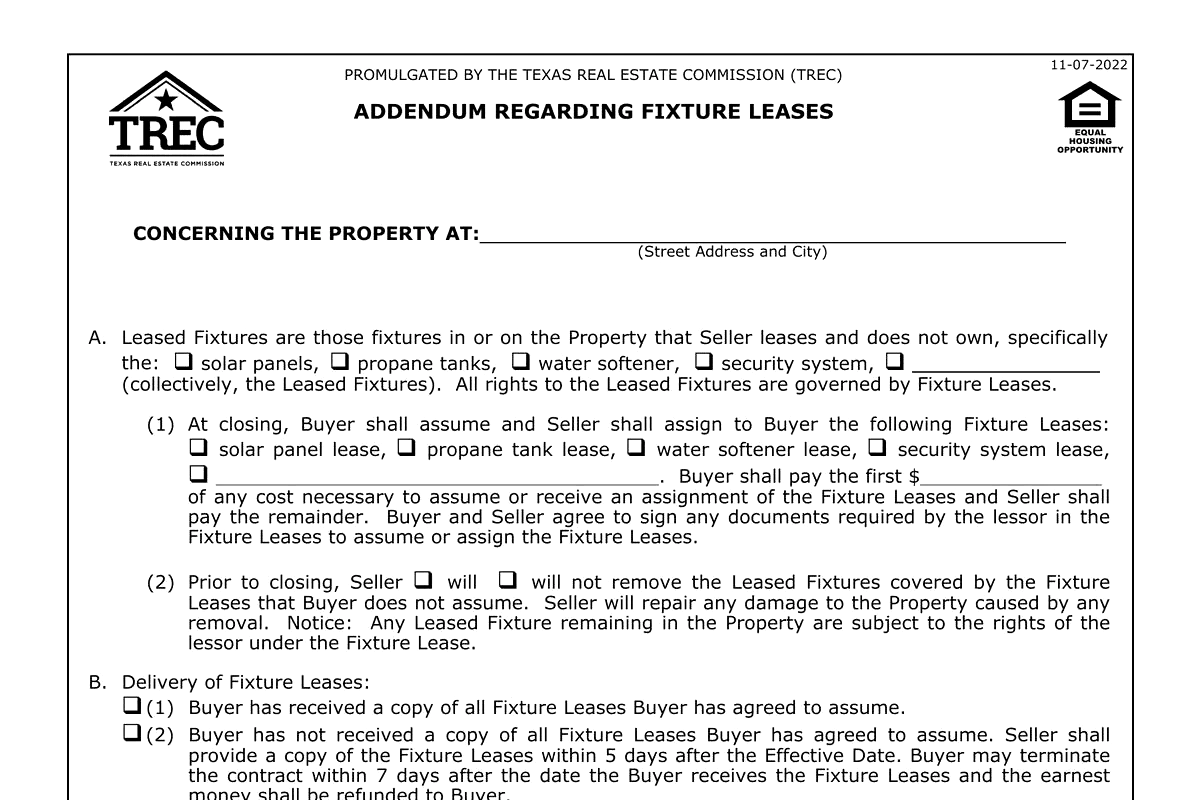
The current form is TREC 52-1, the Addendum Regarding Fixture Leases.
Paragraph A: what’s leased. Checkboxes for solar panels, propane tanks, water softener and security system, plus a blank for anything else.
- A(1) Leases the buyer assumes. At closing, the buyer assumes and the seller assigns the leases checked here. The buyer pays the first dollar amount filled in of any cost to assume or take an assignment, and the seller pays the remainder. Both agree to sign whatever documents the lessor requires.
- A(2) Leases the buyer doesn’t assume. The seller will or will not remove those leased fixtures before closing. The seller repairs any damage caused by removal. The form’s notice: anything left on the property is subject to the lessor’s rights under the lease.
Paragraph B: delivery of the leases.
- B(1) The buyer has already received copies of all leases the buyer agreed to assume.
- B(2) The buyer hasn’t. The seller provides copies within 5 days after the effective date, and the buyer may terminate within 7 days after receiving them, with the earnest money refunded.
- B(3) Notice of any oral fixture lease, with the lessee’s name, the rent and the term.
Paragraph C: liens. At closing, there will be no liens or security interests against leased fixtures that won’t be paid from the sale proceeds, except for leases the buyer agrees to assume.
The form closes with a notice that the buyer and seller should consult the lessor and their attorneys about assignment, assumption or termination of any fixture lease.
Solar Leases: Where Files Get Stuck
Most fixture lease trouble is solar.
- The lessor has to approve the buyer. Many solar companies require an application and a credit check. That’s a separate approval with its own timeline, and it isn’t controlled by anyone in the transaction.
- The lender may count the payment. Some lenders include the lease payment in the buyer’s debt-to-income ratio. Your buyer’s loan officer should know about the lease before underwriting does.
- Roof work gets expensive. Replacing a roof under leased panels usually means paying to remove and reinstall them, under the lease’s rules.
- Payoff numbers change. If the seller plans to buy out the lease, the figure from when they signed won’t be today’s figure. Get a current payoff in writing.
- Some buyers walk. A long remaining term is a real cost, and some buyers won’t take it on. Better they learn that before the offer than on day six of the B(2) window.
How Our TCs Handle It
We fill out the TREC 52-1 only at your specific written direction: which fixtures are leased, which leases the buyer assumes, the A(1) dollar amount, the A(2) removal choice and the Paragraph B box all come from you and your client. We don’t choose them and we don’t negotiate them.
Then we:
- Send the completed addendum to you to review and take to your client, and track signatures
- Add the 5-day lease delivery deadline and the buyer’s 7-day termination window to the deadline timeline as soon as we know the delivery date, with 48-hour reminders to you
- Let title know there are fixture leases on the file, so it’s on their list
- Track the lessor’s transfer paperwork as a contingency item, and send you a Monday key-dates report and a Thursday status report until closing
We don’t contact the lessor on your client’s behalf or decide anything about the lease. If something is missing, we tell you right away.